AC Consultance
1 - Simple definition: a vulnerability is an exploitable weak point
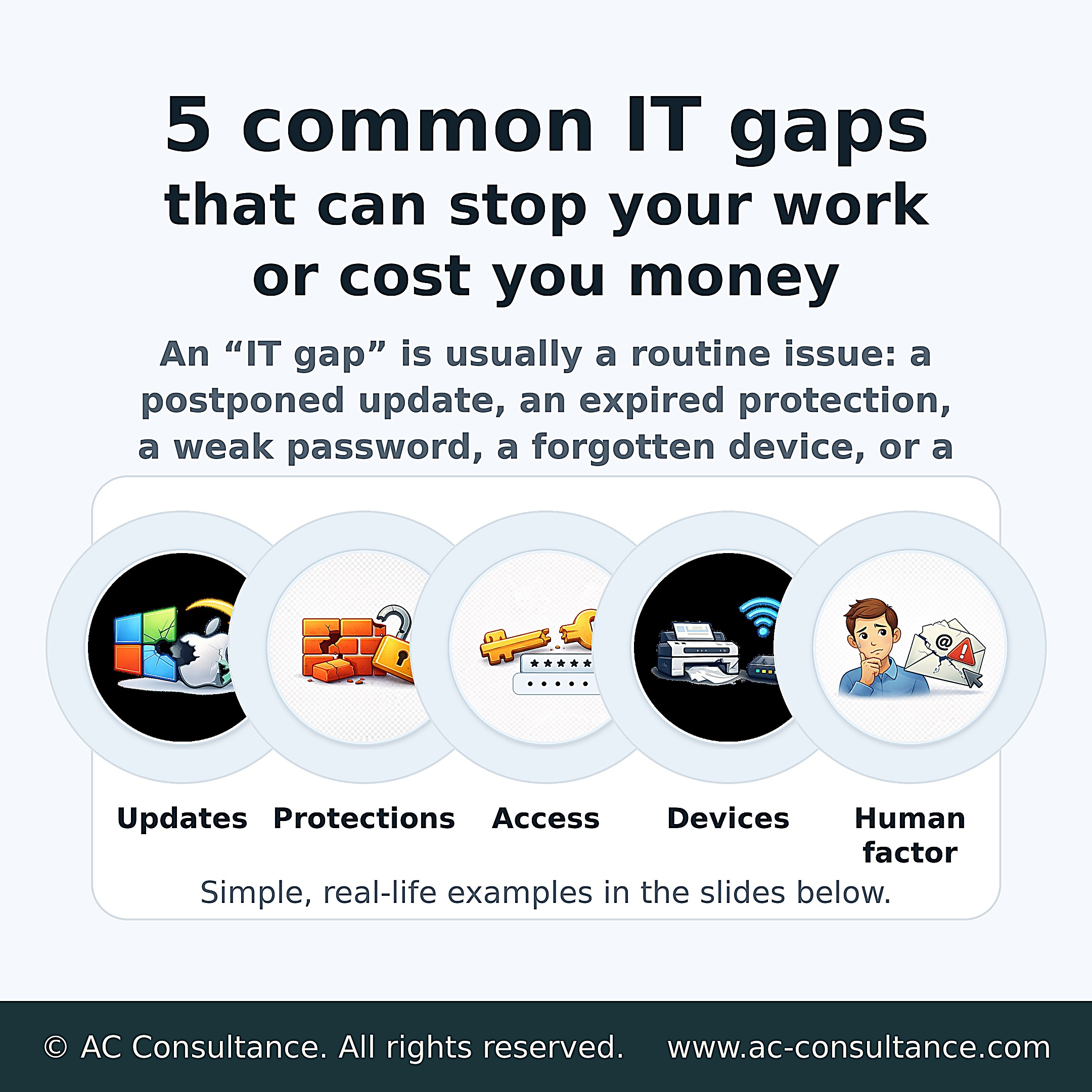
A security vulnerability is a weakness that can be used to bypass a protection. It can be technical (unpatched software), but it can also be very concrete: a password that is too simple, a disabled protection, or a forgotten device on the network. The goal is not to blame anyone, but to understand that a small weakness can sometimes open a door. In an SMB, vulnerabilities often come from day-to-day reality, not from a lack of seriousness. The objective is therefore to identify gaps calmly and fix them on a regular basis.
- A vulnerability is not an attack: it is an opportunity
- It can be technical, organizational, or linked to usage
- Fixing vulnerabilities reduces the likelihood of an incident
2 - Why vulnerabilities are common: the reality on the ground
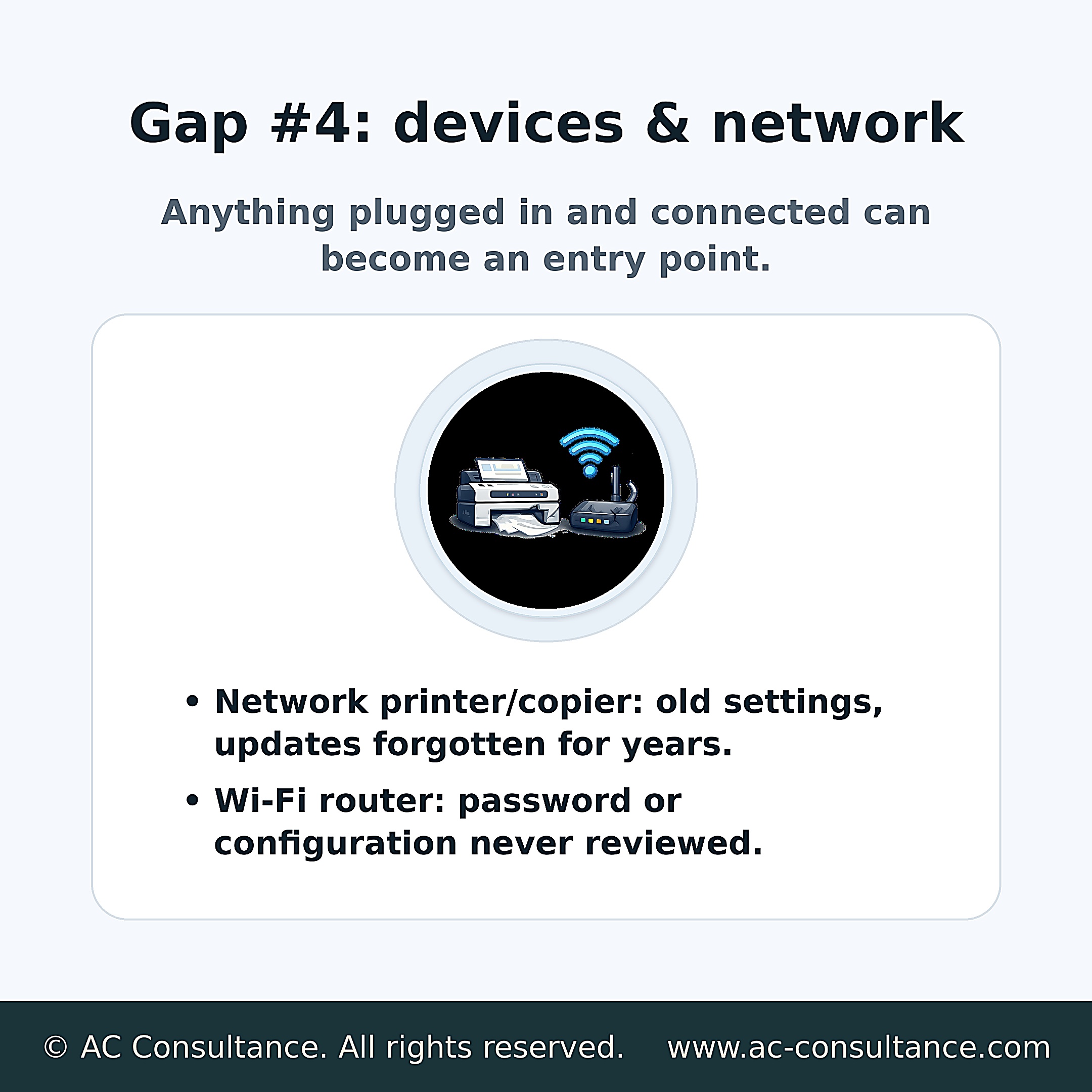
Many vulnerabilities appear when a useful task is postponed because it is not urgent. An update waits, a protection expires without any visible warning, an account is shared to save time, a Wi-Fi router is never reviewed. These choices are understandable in an organization that needs to move forward. The problem is that they accumulate. On the other side, attackers automate the search for fragile systems (scans, credential attempts, exploitation of known versions). Effective prevention therefore means simplifying, standardizing, and repeating good practices.
- Updates postponed (OS, browser, applications)
- Protections expired/disabled (antivirus/EDR, firewall)
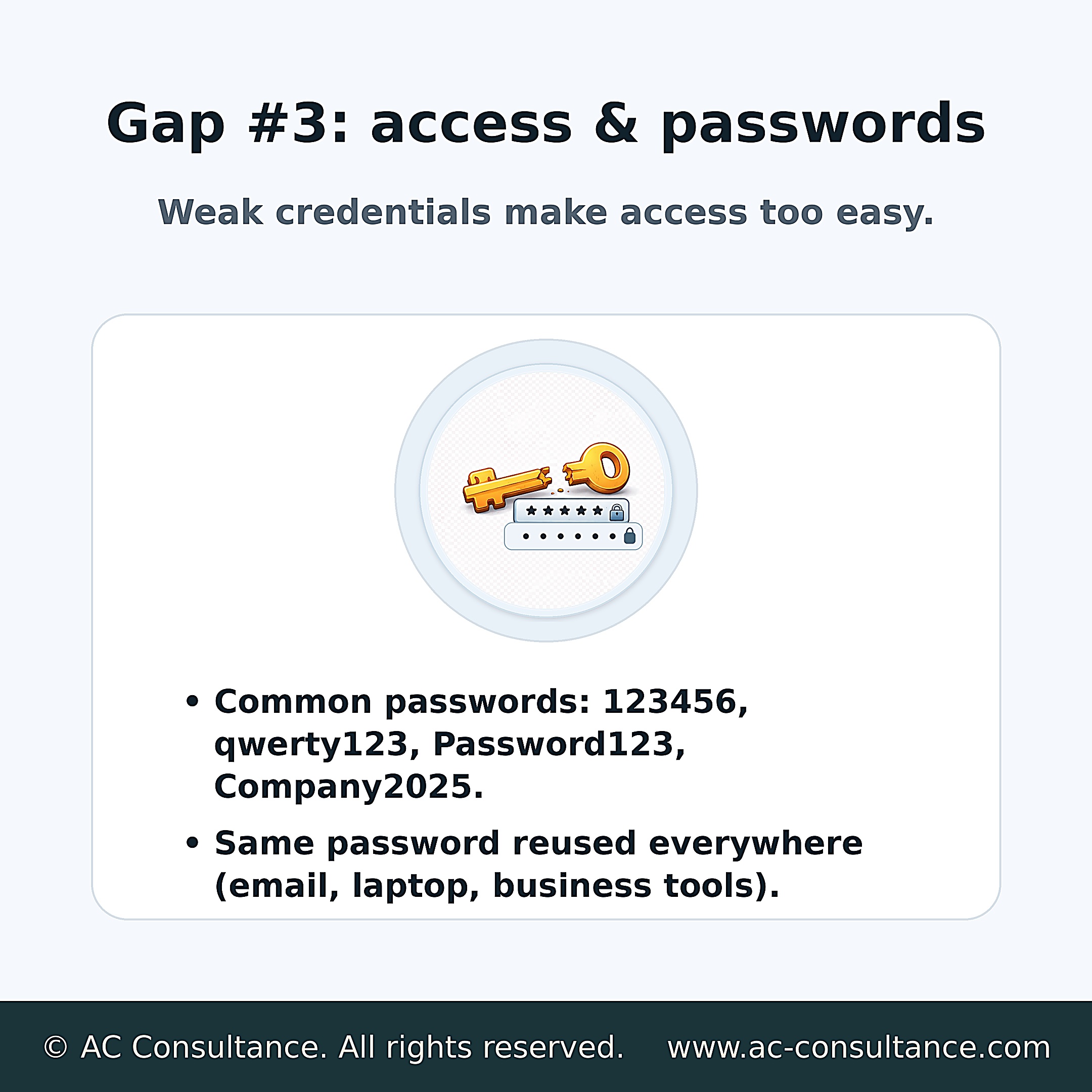
- Weak access controls: passwords, shared accounts, missing MFA
3 - How a vulnerability turns into an incident (no Hollywood scenario)
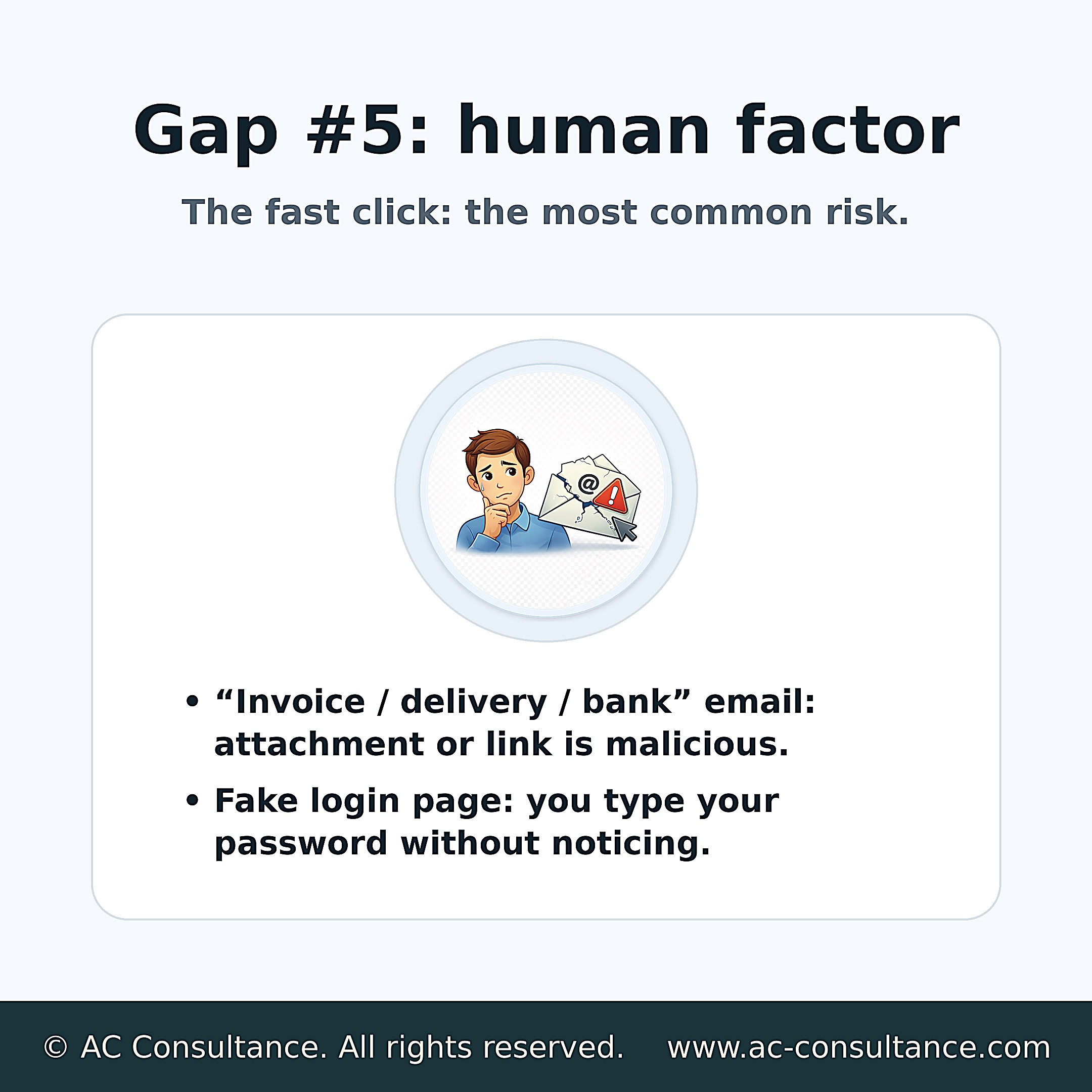
An incident often starts with a simple entry point: a reused password, a deceptive attachment, an outdated browser, or an exposed device. Then the attacker tries to stay discreet, gain more privileges, and reach valuable resources (email, files, business tools, backups). At that stage, the consequences can be immediate: downtime, fraud, data leakage, ransom. What makes the difference is how quickly the activity is detected and how good the response actions are. The earlier it is seen, the more the impact is limited.
- Entry: phishing, weak credentials, vulnerable software
- Spread: excessive privileges, missing MFA, shared accounts
- Impact: disruption, fraud, leakage, ransomware
4 - Preventing risk in an SMB: a clear, progressive, verifiable method
Prevention does not require a collection of tools. It requires a simple method, maintained over time. Start with the essentials: inventory, updates, MFA, removing shared accounts, least privilege, tested backups. Then add visibility with useful alerts on email, endpoints, and the network, without drowning the team. Finally, prepare an incident procedure: who alerts, who isolates, what to keep as evidence, and how to restart cleanly. This approach is reassuring, educational, and measurable: it improves business continuity month after month.
- Prioritize: patching + MFA + no shared accounts
- Secure: tested backups, Wi-Fi/router/printers reviewed
- Prepare: a simple procedure (who does what, in what order)
- Measure: patching, MFA, restore tests, reaction time